
A gentle starting point for balancing body, mind, and hormones
Living with PCOD/PCOS can feel overwhelming from irregular cycles and weight fluctuations to stress and fatigue. While yoga isn’t a medical cure, it can play a supportive role in managing symptoms by reducing stress, improving circulation, and helping regulate lifestyle habits.
For beginners, especially, yoga offers a safe and accessible way to reconnect with the body. You don’t need flexibility or prior experience — just consistency, patience, and mindful practice.
In this guide, we’ll explore beginner-friendly yoga poses that may help support hormonal balance and overall wellbeing.
Why Yoga Helps in PCOD/PCOS Management
Research and clinical wellness programs often highlight lifestyle interventions like physical activity and stress management as important supportive tools. Yoga combines both.
Regular practice may help:
- Reduce stress and cortisol levels.
- Improve blood circulation to pelvic organs.
- Support metabolic function
- Encourage mindful breathing and relaxation.
- Build consistency in daily routine.
These benefits contribute to better overall health, which is key when managing PCOD/PCOS.
Best Beginner Yoga Poses
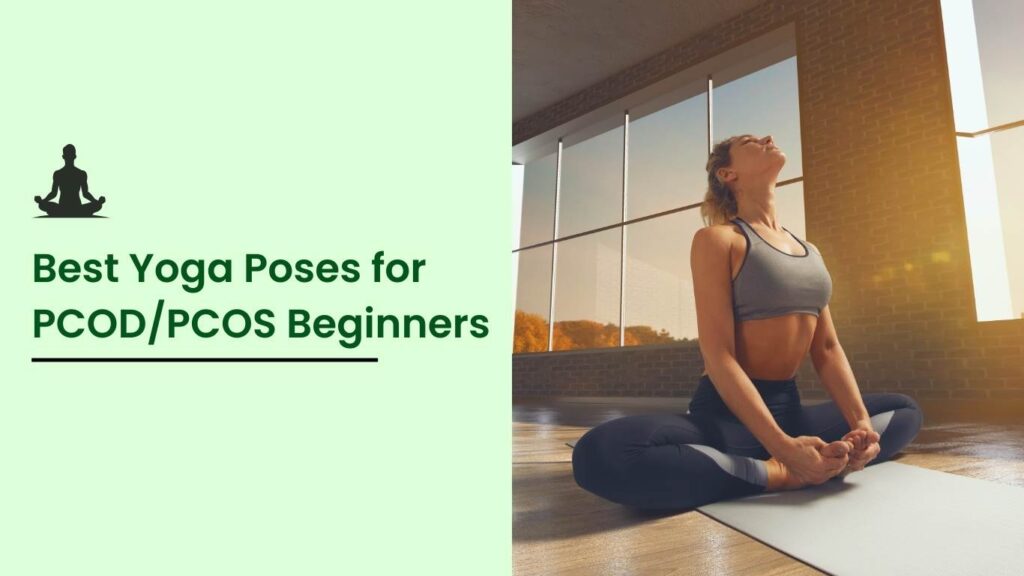
Butterfly Pose (Baddha Konasana)
Why it helps:
This gentle seated posture stimulates the pelvic region and promotes hip flexibility.
How to practice:
- Sit comfortably on the floor.
- Bring the soles of the feet together.
- Hold your feet and gently flap your knees.
- Breathe slowly for 1–2 minutes.
Beginner tip:
Use cushions under your knees if you feel strain.
Cat–Cow Stretch (Marjaryasana–Bitilasana)
Why it helps:
Encourages spinal mobility and improves blood flow throughout the abdominal area.
Steps:
- Come onto hands and knees.
- Inhale — drop belly, lift chest
- Exhale — round back and tuck chin
- Repeat slowly for 8–10 breaths.
Best for:
Morning stiffness and stress relief.
Cobra Pose (Bhujangasana)
Why it helps:
Activates abdominal muscles and promotes circulation around reproductive organs.
Steps:
- Lie on your stomach.
- Place palms under shoulders.
- Lift chest gently.
- Hold for a few breaths.
Reminder:
Lift only as far as comfortable — no forcing.
Bridge Pose (Setu Bandhasana)
Why it helps:
Stimulates endocrine glands and strengthens the lower body.
Steps:
- Lie on your back with your knees bent.
- Lift hips upward.
- Hold 10–15 seconds.
- Lower slowly.
Beginner modification:
Support your hips with a pillow.
Child’s Pose (Balasana)
Why it helps:
Deeply calming — excellent for reducing stress and fatigue.
Steps:
- Kneel and fold forward.
- Rest your forehead on the floor.
- Relax your shoulders.
- Breathe deeply.
Use anytime:
Between poses or at the end.
Corpse Pose (Savasana)
Why it helps:
Promotes nervous system relaxation — essential for hormonal health.
Steps:
- Lie comfortably
- Close eyes
- Focus on breath
- Stay 3–5 minutes
This is not “just resting” — it’s integration.
How Often Should Beginners Practice?
Start small and stay consistent:
- 20–30 minutes per day
- 4–5 days a week
- Focus on breathing and comfort.
Consistency matters more than intensity.
Important Notes
- Yoga supports wellness but doesn’t replace medical care.
- Consult a healthcare professional if needed.
- Avoid comparing progress with others.
- Listen to your body — always.
Everybody responds differently, and that’s okay.
Final Thoughts
Yoga offers more than physical movement — it creates space for patience, self-awareness, and emotional balance. For women navigating PCOD/PCOS, this mind-body connection can be incredibly empowering.
Begin gently. Stay consistent. Celebrate small changes.
Wellness isn’t about perfection — it’s about showing up for yourself.
About Yogiva
At Yogiva, we offer structured online sessions designed specifically for women, focusing on flexibility, stress management, and hormonal wellness support.
If you’re beginning your journey, a guided environment can help you stay consistent and confident.


