
Just imagine !!! You try to do exercise every day , then eat proper foods for few days . Then work gets busy, family responsibilities take over, or you simply feel too tired to keep up.
A week later, you’re back where you started.
If this sounds familiar, you’re certainly not alone.
One of the biggest challenges with weight management isn’t knowing that exercise is important. It’s finding a routine you can actually follow, not like any planner which you can’t stick with.
This is where yoga can make a difference.
Yoga may not burn as many calories as running or a high-intensity workout, but it offers something many people need: a manageable way to move regularly, build strength, reduce stress, and develop healthier habits.
So, can yoga really help with weight management?
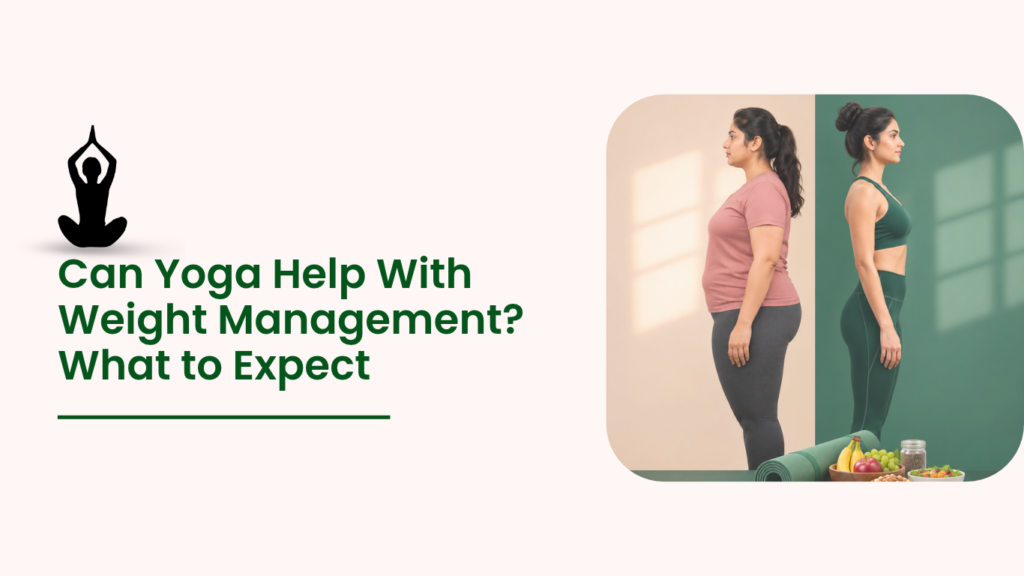
Yes, yoga can help with weight management. But the results depend on how you practise, your overall activity levels, eating habits, sleep, and individual health.
Let’s look at what yoga can realistically do, where its limitations are, and how to get started. Looking for an online yoga class for weight management? Then please do contact Yogiva.
How Does Yoga Help With Weight Management?
When people think about losing weight, they often picture intense exercise, sweating heavily, and burning hundreds of calories.
Yoga works a little differently.
Some yoga styles are physically demanding, while others focus on gentle movement, breathing and relaxation. Both can be useful, although they contribute to weight management in different ways.
1. Yoga Helps You Become More Physically Active
Think about someone who spends eight or nine hours sitting at a desk.
By the time they finish work, their shoulders feel stiff, their back aches, and going to the gym feels like another task on an already long list.
A 20-minute yoga session at home may feel much more achievable.
Practising regularly helps you move your body, improve mobility, and gradually become more comfortable with physical activity.
More active styles, such as Vinyasa or Power Yoga, can also raise your heart rate and contribute to your daily energy expenditure.
The important thing is consistency.
A routine you follow four or five days a week is often more useful than an exhausting workout you abandon after three days.
2. Yoga Can Help Build Strength
Yoga isn’t just stretching.
Try holding a plank, maintaining Warrior II, or moving slowly between standing postures. You’ll notice your muscles working.
Many yoga poses require you to support your own body weight.
For example:
- Plank Pose: Engages the shoulders, arms and core.
- Chair Pose: Challenges the thighs and glutes.
- Warrior II: Builds endurance in the legs.
- Bridge Pose: Strengthens the glutes and supporting muscles around the hips.
- Boat Pose: Challenges abdominal strength and balance.
With regular practice, these movements can improve muscular endurance and body control.
However, yoga shouldn’t automatically be considered a replacement for progressive strength training, especially if building muscle is one of your main goals.
Combining yoga with walking and suitable resistance exercise can provide a more balanced fitness routine.
3. Yoga May Help You Manage Stress
Have you noticed how your eating habits sometimes change during stressful weeks?
Some people lose their appetite. Others find themselves reaching for snacks even when they aren’t particularly hungry.
Stress can affect sleep, appetite, and everyday routines, all of which may influence weight management.
Yoga combines physical movement with breathing and focused attention. This can help some people feel calmer and better equipped to manage daily stress.
That doesn’t mean a breathing exercise will automatically reduce body fat.
But feeling less overwhelmed may make it easier to prepare meals, sleep consistently and maintain a regular exercise routine.
These small changes can support long-term progress.
4. Yoga Encourages Better Awareness of Your Body
One of the less obvious benefits of yoga is learning to pay attention to how your body feels.
During practice, you notice your breathing, muscle tension, balance, and energy levels.
Over time, that awareness may carry into everyday life.
You might notice when you’ve been sitting too long, when you’re genuinely hungry or when you’re eating because you’re distracted.
This doesn’t happen automatically for everyone, and yoga isn’t a treatment for disordered eating. Still, mindful movement can help some people build a more comfortable relationship with their bodies.
Can Yoga Alone Help You Lose Weight?
This is an important question, especially if your main goal is to lose body fat.
Yoga can contribute to weight loss, but it doesn’t guarantee it.
Body weight is influenced by many factors, including overall energy intake, physical activity, genetics, medications, health conditions, and sleep.
Some forms of yoga use more energy than others.
For example, a dynamic Vinyasa session generally involves more continuous movement than a gentle restorative session.
But even an energetic yoga class may not provide enough activity on its own to meet every person’s weight-management goals.
If weight loss is your objective, yoga works best as part of a broader routine that includes balanced nutrition, regular movement, and appropriate strength training.
You don’t need to give up yoga or start doing exhausting workouts every day.
You simply need realistic expectations.
Which Type of Yoga Is Best for Weight Management?
There isn’t one yoga style that works best for everybody.
Your fitness level, health, preferences, and schedule all matter.
Hatha Yoga: A Good Starting Point
If you’re new to yoga, Hatha Yoga can be a comfortable place to begin.
Sessions generally involve individual postures, controlled movement, and breathing.
You have time to understand each pose without feeling rushed.
Hatha Yoga is particularly useful for beginners who want to improve flexibility, balance, and basic strength before moving into more demanding sessions.
Vinyasa Yoga: For People Who Enjoy Movement
Vinyasa Yoga connects poses through flowing sequences.
Because you’re moving more frequently, it can feel more physically challenging than a gentle yoga class.
It may suit people who already have some exercise experience and enjoy an active session.
However, faster isn’t always better.
Good technique and appropriate modifications matter more than completing as many poses as possible.
Power Yoga: For a More Demanding Practice
Power Yoga typically includes challenging standing poses, core exercises, and strength-focused transitions.
It can help improve muscular endurance and contribute to physical activity.
But it may not be appropriate for everyone, particularly beginners with limited mobility or people recovering from an injury.
Restorative Yoga: For Recovery and Relaxation
Restorative Yoga uses supported poses and longer holds to encourage relaxation.
It doesn’t involve substantial calorie expenditure.
Its value lies elsewhere: helping you unwind, recover, and manage stress.
For someone struggling with poor sleep or a hectic schedule, a restorative session may be a useful addition to a more active routine.
Also Read Top 10 Yoga Asanas For Weight Loss And Weight Management
6 Yoga Poses to Include in a Weight-Management Routine
You don’t need to master complicated postures to begin.
These familiar yoga poses can help develop strength, mobility, and body awareness.
1. Tadasana (Mountain Pose)
Tadasana looks simple, but it’s a useful starting point for posture and balance.
Stand comfortably with your feet grounded. Lengthen through your spine, relax your shoulders and breathe naturally.
Focus on distributing your weight evenly.
Why practise it? It encourages postural awareness and prepares you for standing sequences.
2. Utkatasana (Chair Pose)
Stand with your feet comfortably apart.
Bend your knees and move your hips back as though you’re sitting in a chair.
Keep your chest lifted and avoid forcing your knees into an uncomfortable position.
Hold briefly while breathing steadily.
Why practise it? It challenges the thighs, glutes and core.
3. Virabhadrasana II (Warrior II)
Step your feet apart, turn your front foot outward and bend the front knee.
Extend your arms to either side, keeping your shoulders relaxed.
Hold the position for a few comfortable breaths before switching sides.
Why practise it? It develops leg endurance, balance and body control.
4. Setu Bandhasana (Bridge Pose)
Lie on your back with your knees bent and feet resting on the floor.
Gently lift your hips while keeping your neck relaxed.
Avoid pushing into pain or lifting higher than you can comfortably control.
Why practise it? It engages the glutes and supporting muscles around the hips.
5. Marjaryasana–Bitilasana (Cat-Cow)
Begin on your hands and knees.
Slowly alternate between gently rounding your back and extending your spine within a comfortable range.
Coordinate the movement with natural breathing.
Why practise it? It encourages spinal mobility and can be a useful warm-up.
6. Balasana (Child’s Pose)
Kneel comfortably and move your hips back toward your heels while reaching your arms forward.
Use a cushion or modify the position if your knees or hips feel uncomfortable.
Why practise it? It provides a gentle opportunity to rest between more active movements.
These poses don’t specifically burn belly fat or remove fat from particular body areas. Their value comes from helping you build a regular, balanced movement practice.
How Often Should You Practise Yoga for Weight Management?
You don’t have to practise for an hour every day. For someone just starting, three or four sessions per week may be more manageable.
Here’s an example of how a beginner could structure the week:
| Day | Activity | Duration |
|---|---|---|
| Monday | Beginner Hatha Yoga | 25–30 minutes |
| Tuesday | Brisk walking | 30 minutes |
| Wednesday | Strength-focused yoga | 30 minutes |
| Thursday | Walking or suitable strength exercise | 30 minutes |
| Friday | Gentle Vinyasa Yoga | 25–30 minutes |
| Saturday | Walking and restorative yoga | 30–45 minutes |
| Sunday | Rest or light movement | As comfortable |
This is only an example. Adjust the duration and intensity to your fitness level.
For general health, adults are usually advised to aim for at least 150 minutes of moderate-intensity aerobic activity each week, along with muscle-strengthening activities on at least two days.
Yoga can support those goals, depending on the style and intensity, but gentle yoga alone may not meet all of them.
How Long Does It Take to See Results From Yoga?
People often ask whether they’ll notice a difference after two weeks or one month.
The answer depends on what kind of results you’re expecting.
You might notice improvements in your comfort with certain movements, balance or flexibility before you see any meaningful change in body weight.
Strength and endurance usually develop gradually with consistent practice.
Weight changes are less predictable.
Some people lose weight while practising yoga as part of broader lifestyle changes. Others maintain their weight but feel stronger, move more comfortably or become more active.
That’s still progress.
Rather than focusing only on the number on the weighing scale, consider asking yourself:
- Can I complete a session more comfortably than before?
- Am I becoming more consistent with exercise?
- Do I feel stronger during standing poses?
- Am I moving more throughout the day?
- Has my sleep or stress management improved?
These changes matter even when the scale hasn’t moved.
Common Mistakes People Make When Starting Yoga for Weight Loss
Expecting Yoga to Work Like a Quick-Fix Diet
Yoga isn’t a seven-day weight-loss challenge.
If you approach it expecting dramatic results within a week, you’re likely to feel disappointed.
Think of it as a long-term habit you’re building.
Choosing Difficult Poses Too Soon
It’s tempting to try advanced poses after watching someone perform them effortlessly online.
But a challenging pose isn’t necessarily more beneficial.
Start with movements you can control and progress gradually.
Ignoring Everyday Activity
A 30-minute yoga session is valuable, but it doesn’t cancel out an otherwise completely inactive day.
Walking, taking movement breaks and reducing prolonged sitting can all contribute to a healthier routine.
Practising Without Considering Health Conditions
Not every pose suits every person.
If you have persistent joint pain, high blood pressure, an injury, pregnancy-related considerations or another medical condition, some movements may need modification.
A qualified instructor can help adapt your practice, while a healthcare professional can advise on medical restrictions.
What If You Have PCOS, Thyroid Problems or Hormonal Weight Changes?
Weight management can be particularly frustrating when an underlying health condition is involved.
Someone living with PCOS, for example, may experience weight-management challenges alongside other symptoms.
Yoga may support physical activity, stress management, and general well-being, but it doesn’t cure PCOS or replace appropriate medical care.
The same applies to thyroid disorders and other hormonal conditions.
If your weight has changed unexpectedly or you’re experiencing persistent symptoms, it’s worth discussing them with a healthcare professional.
The goal should be to build a routine that supports your health, not to push through exhaustion or discomfort.
Is Online Yoga Effective for Weight Management?
Online yoga can be a practical option, especially when travelling to a studio is difficult.
You can practise from home, choose suitable class timings, and fit movement around your daily responsibilities.
However, there’s a difference between following random videos and joining a structured class.
A live instructor can observe your movements when the camera view allows, suggest modifications and help you progress at an appropriate pace.
For beginners, this guidance can make the experience more comfortable.
At Yogiva, the focus is on helping people build a yoga practice that suits their goals, experience and lifestyle.
Whether you’re starting from scratch or returning after a long break, the aim is to make regular movement feel achievable.
A Final Thought: Don’t Make Weight the Only Measure of Progress
It’s easy to believe that exercise is only working when the weighing scale shows a smaller number.
But imagine practising yoga regularly for a few months.
You can hold a pose longer. Walking upstairs feels easier. You’re more confident moving your body. You look forward to your sessions instead of forcing yourself through them.
Those improvements deserve recognition.
Yoga can be a useful part of weight management, but it works best when you stop treating it as a shortcut.
Start with a routine you enjoy, give yourself time to improve, and remember that your health is about more than a number.
Want to build a yoga routine that fits your lifestyle?
Explore Yogiva’s online yoga classes and discover instructor-guided sessions suited to your experience and personal goals.
Frequently Asked Questions
Can yoga help reduce belly fat?
Yoga can contribute to overall physical activity and weight management, but it cannot selectively remove fat from the belly. Changes in body fat depend on broader factors, including nutrition, activity and individual health.
Is 30 minutes of yoga a day enough for weight loss?
Thirty minutes of yoga can be a useful daily habit. Whether it leads to weight loss depends on the intensity of the practice and your overall lifestyle. Additional aerobic activity and strength training may be beneficial.
Which yoga is best for beginners who want to manage their weight?
Hatha Yoga or a beginner-friendly Vinyasa class can be a good starting point. Choose a style that matches your fitness level and allows you to practise consistently.
Can I lose weight by doing yoga at home?
Yoga at home can support weight management, particularly when combined with suitable nutrition and regular physical activity. Live online classes may help beginners maintain technique and consistency.
Is yoga better than walking for weight loss?
Neither is automatically better. Brisk walking generally provides a straightforward form of aerobic exercise, while yoga can help develop strength, mobility, balance and relaxation. Combining both can be beneficial.
How many days a week should I practise yoga?
Beginners might start with three sessions per week and gradually increase their frequency. The right schedule depends on the style of yoga, your fitness level and your other activities.